How a Professional Storm Chaser Stays Connected with RoamLink and Peplink
|


Start with a complete internet bundle (router, antenna, cables and setup help), or talk to an expert.
SEE INTERNET BUNDLESOr rent a router + plan →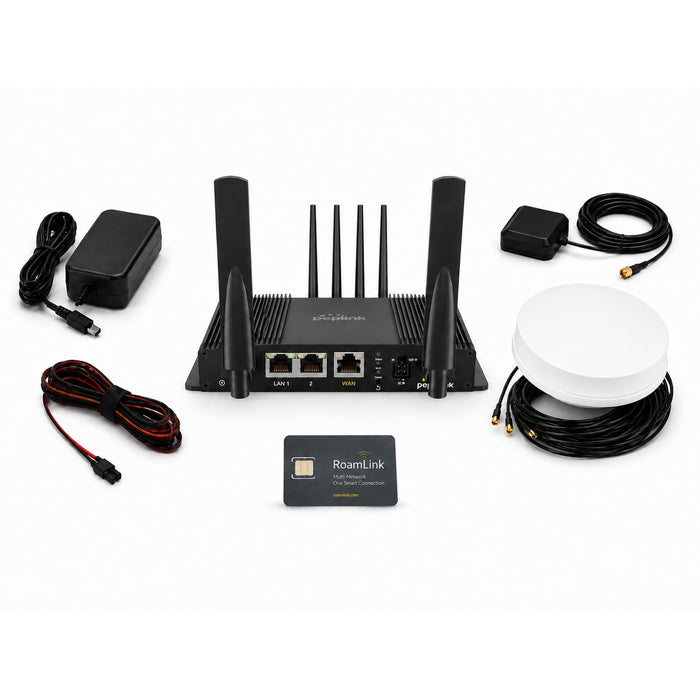
Pair Starlink with a Peplink router so you stay online when trees block the sky.
SEE ROUTERS
Answer a few quick picks and we build your plan, device and price.
HELP ME CHOOSE
Answer a few questions and get a complete, compatible power system.
START THE BUILDER
Take the 1-minute quiz and get the right filter for your setup.
TAKE THE QUIZ

|
When professional storm chaser B. Dean Berry (Instagram: @TheKeystonePrime) heads into severe weather, reliable internet is more than a convenience. It is the connection between his cameras and the viewers, broadcasters, meteorologists, and communities relying on real-time information.
Over the past eight years, Berry’s storm footage and live streams have appeared across major national weather and news outlets, as well as fast-growing online weather channels. His vehicles carry scanners, two-way radios, power-management systems, backup batteries, multiple cameras, and dedicated live-streaming equipment.
But all that technology depends on one thing: connectivity.
As Berry puts it, “If you aren’t live, you’re dead.” A stream that drops at the most important moment can mean lost footage, lost revenue, and lost access to potentially valuable weather information.
That is why Berry equips his chase vehicles with RoamLink cellular internet service from MobileMustHave and Peplink mobile routers.
Storm chasing creates a particularly difficult mobile internet environment. A chase can move through cities, rural highways, farmland, mountains, and areas where communications infrastructure has been damaged by the storm itself.
Before using RoamLink, Berry experimented with nearly every type of mobile internet solution available. His previous setups included prepaid phones, cellular boosters, portable hotspots, carrier-specific jetpacks, multiple SIM cards, and routers connected to several separate devices.
The result was often a complicated collection of equipment that still depended too heavily on a single carrier or required manual intervention at exactly the wrong moment.
Berry also uses satellite internet and recognizes its value as part of a mobile connectivity setup. However, severe weather can create situations where a clear view of the sky is unavailable. Dense cloud structures, tree cover, physical obstructions, or equipment damage can interfere with any connection that relies on an exposed satellite terminal.
The answer was not necessarily to choose cellular or satellite exclusively. It was to build a more resilient system with multiple available connection paths.

Everything you need and nothing you don't. Designed for the traveler who wants reliable access to the internet without breaking the bank or breaking any speed records. Time-tested, reliable internet that blows away cheap WiFi hotspots.
Shop Bundle
If you're looking for the fastest possible cellular download speeds but don't need a device with multiple cellular modems, then the Speed Demon bundles are for you. Combine the latest generation 5G with optional Starlink for added reliability + speed.
Shop Bundle
When connection reliability is everything, the Ultimate Road Warrior has you covered. Two redundant 5G cellular modems and a wired ethernet port for adding Starlink or another external source lets you combine up to 7+ internet sources.
Shop BundleDuring a major storm near Kankakee, Illinois, Berry’s vehicle was struck by exceptionally large hail while he was broadcasting live.
The storm damaged equipment, including the satellite hardware serving as one of his internet connections. According to Berry, the RoamLink connection running through his Peplink router continued carrying the broadcast after the satellite equipment went offline. His viewers were still able to follow the storm as it moved through the area.
The incident demonstrated why Berry built his system around multiple connection paths.
RoamLink did not make the storm safe or prevent equipment damage, and no mobile internet service can guarantee availability during every emergency. It did provide another working connection when a critical part of his setup failed.
Without that additional path, Berry could have sustained the same damage while also losing his live coverage, access to critical weather information, and communications with his audience and media partners.
In his business, being first matters. Being accurate matters more. Staying connected supports both.
Berry’s working environment may be unusual, but the principle behind his setup applies far beyond storm chasing. Contractors need connectivity across changing job sites. Production teams need to upload footage from the field. Businesses need backup internet when a primary connection fails. RV travelers and remote workers need more than one potential path as they move between locations.
The answer is rarely finding one perfect network. It is building a system in which available connections can work together without making the technology itself a distraction.
RoamLink gives compatible Peplink equipment access to major nationwide U.S. cellular networks, including AT&T, Verizon, T-Mobile, and U.S. Cellular. Instead of building a mobile internet system around one carrier’s coverage map, users can connect across a broader multi-carrier network.
That flexibility is important because the strongest cellular provider can change from one town, highway, or campsite to the next.
Berry experienced another example when an engine failure left him stranded on the Pennsylvania Turnpike. His personal phone carrier had no usable service at that location, and his satellite terminal was already damaged. RoamLink was still able to provide the connection he needed to make a Wi-Fi call and arrange a tow.
The situation was less dramatic than a tornado intercept, but the lesson was the same: reliable mobile internet is most valuable when other options are unavailable.
Berry has installed a Peplink MAX BR1 Mini 5G in each of his three chase vehicles.
The Peplink router’s compact footprint makes it practical for vehicles where space is limited. Berry has mounted units under seats, beneath a floorboard, and along the interior sidewall of a vehicle.
The BR1 Mini 5G combines a rugged design with a second-generation 5G modem. Depending on the selected model and configuration, it can also support Wi-Fi, Ethernet WAN, Hot Failover, connection smoothing, and bandwidth bonding.
For Berry, the biggest benefit is not any individual technical specification. It is that the system does its job without demanding constant attention.
“This is the first thing that I have used that I generally don’t have to worry about,” he said. “It keeps me on the air.”
Most RoamLink customers will never drive toward a tornado or broadcast while softball-sized hail strikes their vehicle. However, the connectivity problem Berry faces is familiar to many travelers.
RVers, remote workers, boaters, mobile businesses, first responders, and field crews all operate in places where one internet connection may not be enough.
A remote employee cannot afford to disappear during an important meeting. An RV family may need dependable internet for work and school. A field technician may need cloud access from a rural jobsite. A traveler may simply need a reliable way to communicate during a roadside emergency.
RoamLink and Peplink provide a cellular-based foundation that can serve as a primary mobile internet connection or complement other available connections. MobileMustHave’s RoamLink Connect options can also include Peplink hardware as part of the service, reducing the need to purchase and configure separate carrier plans and equipment independently.
Storm chasing is an extreme test of any mobile internet system. Equipment is exposed to vibration, temperature changes, long driving days, rural coverage gaps, and some of the most severe weather conditions imaginable.
For B. Dean Berry, RoamLink cellular internet and Peplink mobile routers have repeatedly passed that test.
Whether you are broadcasting beneath a supercell, working from an RV, traveling between remote destinations, or building a more resilient backup internet system, dependable connectivity begins with having more than one path to the outside world.
Explore RoamLink cellular internet plans and Peplink mobile routers from MobileMustHave to build a mobile connectivity solution designed for the places your travels take you.
You can follow B. Dean Berry’s live storm-chasing work across several platforms:
During severe weather events, Berry’s footage may also appear on national television networks and popular online weather channels.
Dave Curtis
Dave has been part of the MobileMustHave team since 2019, helping mobile travelers stay informed about the technology and solutions that keep them connected on the road. Outside of MobileMustHave, Dave is a professional photographer specializing in sailing photography, capturing the action, energy, and character of the sport from behind the lens. His work has appeared in collegiate and competitive sailing coverage.


