Starlink V5 Is Here: What RVers Need to Know
|


Start with a complete internet bundle (router, antenna, cables and setup help), or talk to an expert.
SEE INTERNET BUNDLESOr rent a router + plan →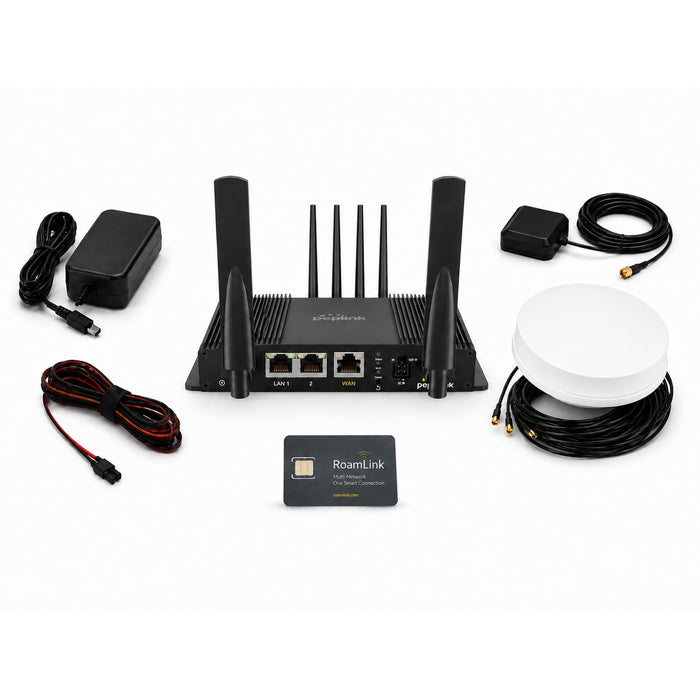
Pair Starlink with a Peplink router so you stay online when trees block the sky.
SEE ROUTERS
Answer a few quick picks and we build your plan, device and price.
HELP ME CHOOSE
Answer a few questions and get a complete, compatible power system.
START THE BUILDER
Take the 1-minute quiz and get the right filter for your setup.
TAKE THE QUIZ

|
Starlink has introduced its latest residential satellite internet dish, and at first glance, the new hardware seems tailor-made for RV travelers.
The Starlink V5 dish is dramatically smaller than the previous V4 model. It weighs less, uses considerably less electricity, and comes with a more flexible equipment setup. Those are all meaningful improvements for anyone trying to stay connected from an RV, van, boat, remote cabin, or other off-grid location.
So, is the Starlink V5 a meaningful upgrade for mobile internet users, or is it primarily a more convenient residential dish? Here is what we know so far.
One important note: Starlink can be an excellent part of a mobile connectivity system, especially in places where cellular coverage is weak or unavailable. But trees, terrain, weather, congestion, equipment placement, and service-plan rules can still affect performance. For customers who need dependable internet for work, streaming, navigation, security systems, or communication, MobileMustHave continues to recommend a hybrid setup that combines Starlink with a Peplink router and a RoamLink cellular data plan.
The Starlink V5 dish is designed as a more refined version of the previous standard hardware. The most noticeable changes are physical. The dish has a smaller footprint (Roughly 12in by 15in compared to 15in by 23in for the Standard V4 dish) and weighs less(2.4 lbs versus 6.4 lbs), which can make storage, transport, and temporary deployment easier. For RV owners who set up and break down their system frequently, those improvements are meaningful.
Power efficiency is another important update. Electrical consumption matters in an RV, van, or boat, particularly when operating from batteries, solar, or an inverter. A more efficient terminal can reduce the demand placed on an off-grid power system and help extend runtime when shore power is not available. The new Starlink V5 dish has a reported power consumption range of 35-50W which is roughly half of V4's 75-100W power consumption numbers.
One other item of note related to power, this dish does not require the included router in order to function. This means that the unit can be powered via Power-Over-Ethernet (POE) for more advanced setups and can be managed by a Peplink router simplifying integration for users looking to add Starlink to their existing mobile network setup.
Starlink V5 is the newest generation of Starlink’s standard consumer internet hardware. It is currently rolling out in select areas, with availability expected to expand as production increases.
Unlike a traditional satellite TV dish, Starlink uses an electronically steered phased-array antenna to communicate with satellites in low Earth orbit. The system is designed to provide broadband internet in places where cable, fiber, and reliable cellular service may not be available.
Our friends at the Mobile Internet Resource Center noted that the new Starlink V5 model actually has a slow maximum download speed as mentioned on Starlink's website; 375+ MBps versus 400+ MBps quoted for the Standard V4.
Until the unit can be tested, we won't know how much of a difference that maximum speed number will matter in the real world. Starlink performance varies based on location, service plan, network capacity, time of day, obstructions, and local congestion. Starlink also makes clear that advertised or expected speeds are not guaranteed.
We recommend that you subscribe to our Insider Membership which includes access to the Mobile Internet Resource Center. They plan to test the new dish as soon as it is available.
Starlink specifically states that the V5 is not intended for in-motion use.
That distinction is important. The dish may be compact enough to carry in an RV and durable enough for an outdoor installation, but that does not mean it is approved for operation while traveling down the highway.
For RVers, the V5 should currently be viewed as a portable or fixed-use option: arrive at the campsite, position or mount the dish, connect the equipment, and use it while parked.
Travelers who need an active Starlink connection while their RV or boat is moving should choose hardware and a service plan specifically approved for in-motion operation.
Starlink’s current hardware and plan choices can change frequently, so confirm the latest eligibility, plan requirements, and permitted uses directly with Starlink before purchasing equipment for a mobile installation.
As our partners at Mobile Internet Resource Center note in their coverage that users who sign up directly with Starlink for service and would like to use a Roam plan, there is no longer an option to select a Standard Dish. The only two options available are the Mini or the Performance dish. In addition, there does not seem to be an option to purchase a dish outright from Starlink.com, instead opting to charge a rental fee for the hardware.
However, if you purchase a dish outright, such as from MobileMustHave.com, you will still be able to activate a Roam plan, regardless of the model you choose. This information is current as of July 2026, and is subject to change at any time. It is always a good idea to check with our Customer Service team should you have any concerns about which setup is right for you. Set up a time to chat with our team over at Talk.MobileMustHave.com.
We feel like the Starlink V5 unit seems like it might be a downgrade from the V4 version. We'll update things once we get a chance to test the dish in real-world conditions. Stay tuned here and over at Mobile Internet Resource Center too, or check in with our staff should you have any questions about which dish is right for you.
A hybrid internet system brings multiple connections into one managed network. In the setup MobileMustHave most often recommends, Starlink provides the satellite connection, a RoamLink plan provides cellular data, and a Peplink router manages how those connections are used throughout the RV.
The Peplink router becomes the center of the RV network. It can distribute Wi-Fi and Ethernet connections while managing Starlink, cellular, and other available WAN sources. It will also offer the option to bond those connections together via SpeedFusion Connect which can be a game-changer in areas where any one connection might be unstable. The difference for those of us who work from the road and are often on telepresence calls like Zoom or Teams is impressive. To make it easier for customers new to mobile internet, we have paired popular Peplink routers with antennas and other needed items in our Mobile Internet Bundles.
RoamLink adds cellular connectivity designed for travelers who need flexible mobile internet. Depending on the selected plan and compatible equipment, cellular service can provide a primary connection, a backup connection, or an additional path for critical traffic. We created RoamLink specifically because we wanted the flexibility of being able to switch cellular networks instead of being locked into one carrier. This also eliminates the need to carry and pay for multiple carriers - a noted complaint from seasoned travelers. Check out our RoamLink plan overview page for more information about specific plans.
Starlink can deliver high-speed internet in many remote locations. This can be really useful if you find yourself in locations where cellular internet reception is spotty. That said, we caution against relying on Starlink as your single-source internet solution while you travel. Too often, we see situations where tree coverage or other factors block too much of the sky to make Starlink usable leading to frustration and downtime.
Starlink V5 is a useful evolution of the standard Starlink dish. Its smaller size, lower weight, and improved efficiency make it easier to integrate into many mobile and off-grid setups. However, it should not be viewed as a complete replacement for cellular internet or as a guarantee of faster service everywhere.
For the most reliable RV internet experience, MobileMustHave continues to recommend a hybrid solution: Starlink for satellite coverage, a Peplink router to manage the network, and a RoamLink data plan for cellular connectivity. Each connection has strengths and weaknesses. Used together, they create a more resilient system that can adapt as the RV moves from one location to the next.
Dave has been part of the MobileMustHave team since 2019, helping mobile travelers stay informed about the technology and solutions that keep them connected on the road.
Outside of MobileMustHave, Dave is a professional photographer specializing in sailing photography, capturing the action, energy, and character of the sport from behind the lens. His work has appeared in collegiate and competitive sailing coverage.


